Picture this: it’s a busy evening at your store. Bills are flying, customers are rushing, and by closing time, sales show ₹50,000. Everything looks fine until you find ₹2,000 missing from the cash drawer. No trace. No clue. This is the reality of billing misuse: small leaks that cause big losses. A cancelled bill, a fake refund, or an unapproved discount can silently eat into profits. Let’s start with what billing fraud means, how it happens, and how you can protect your business using smart technology.
What is billing fraud or misuse?
Billing fraud happens when someone manipulates your billing process intentionally or unintentionally for personal gain or to hide errors. It could be a cashier cancelling a bill after collecting payment, a staff member pocketing refunds, or even a mismatch between billed and stocked items. Such frauds often go unnoticed because they look like normal daily transactions but over time, they cause huge revenue leaks and harm business credibility.
Why billing security is non-negotiable
Billing is the core of your business. Every sale, payment, or refund passes through this system. If it’s not secure, you’re opening doors to loss and manipulation. Here’s why business owners today can’t afford weak billing controls:
- Every rupee counts, even small frauds repeated daily can become major losses.
- Digital payments are increasing, making fraud more complex and harder to trace.
- Owners can’t be present 24/7, so systems must work as watchdogs.
- Customer trust is at stake and wrong billing or double charges hurt reputation.
In short, billing security is not a luxury. It’s your profit protection shield.
Common types of billing fraud
Billing misuse can take many forms. Here are the most common ones businesses face.
Bill cancellation or deletion fraud
After billing a customer and collecting cash, the employee cancels or deletes the bill. The sale disappears from reports, and the money goes unrecorded.
Tip: Always track “voided” or “cancelled” bills and link them to users for accountability.
Fake returns and refunds
Fraudsters generate fake “return” bills and mark them as refunded. The returned item never comes back but the refund amount goes missing.
Tip: Make sure your system logs who processed refunds and demands manager approval for high-value returns.
Unauthorized discounts and price edits
Employees may offer discounts without approval or edit item prices to help friends or repeat customers.
Tip: Set strict limits for discounts, and get alerts for any manual price changes.
Double billing or overcharging
Charging a customer twice or adding extra items on the bill can lead to disputes and loss of trust.
Tip: Use systems that automatically detect duplicate bills and prevent manual tampering.
Inventory and billing mismatch
When your stock count doesn’t match your billing data, it’s a sign of hidden fraud or poor control.
Tip: Integrate billing with inventory and accounting to ensure every sale reduces stock in real time.
Latest trends in billing and payment frauds
The way fraud happens is changing fast. Modern fraudsters use technology and sometimes, employees get creative with misuse. Here are the top billing and payment fraud trends every business should know.
Internal misuse
Fifty-nine percent of Indian organizations reported facing financial or economic fraud in the past 24 months. A large share of these cases stem from internal misuse trusted staff who exploit system loopholes by cancelling bills, issuing fake refunds, or giving unauthorized discounts when the owner isn’t around.
Solution:Use role-based permissions and real-time monitoring to detect internal misuse early.
Source: https://www.pwc.in/pwcs-global-economic-crime-survey-2024-india-outlook.html
Digital payment scams
As digital payments (UPI, wallets, QR codes) grow, new frauds are rising:
- Fake QR codes used at billing counters.
- “Collect request” scams tricking cashiers.
- Using personal UPI accounts instead of official business ones.
Solution: Verify every QR code, and integrate your billing software directly with secure payment gateways.
Gift card/Voucher frauds
Unscrupulous staff may issue gift cards without recording them in the system or redeem them fraudulently.
Solution: Use billing software that tracks gift card issuance, redemption, and expiry with proper approval flows.
Lack of real-time visibility
In many small and mid-sized businesses, reports are checked only at day-end or week-end. By then, the damage is already done.
Solution: Use real-time reporting tools that alert you instantly about suspicious activity like cancellations or excessive refunds.
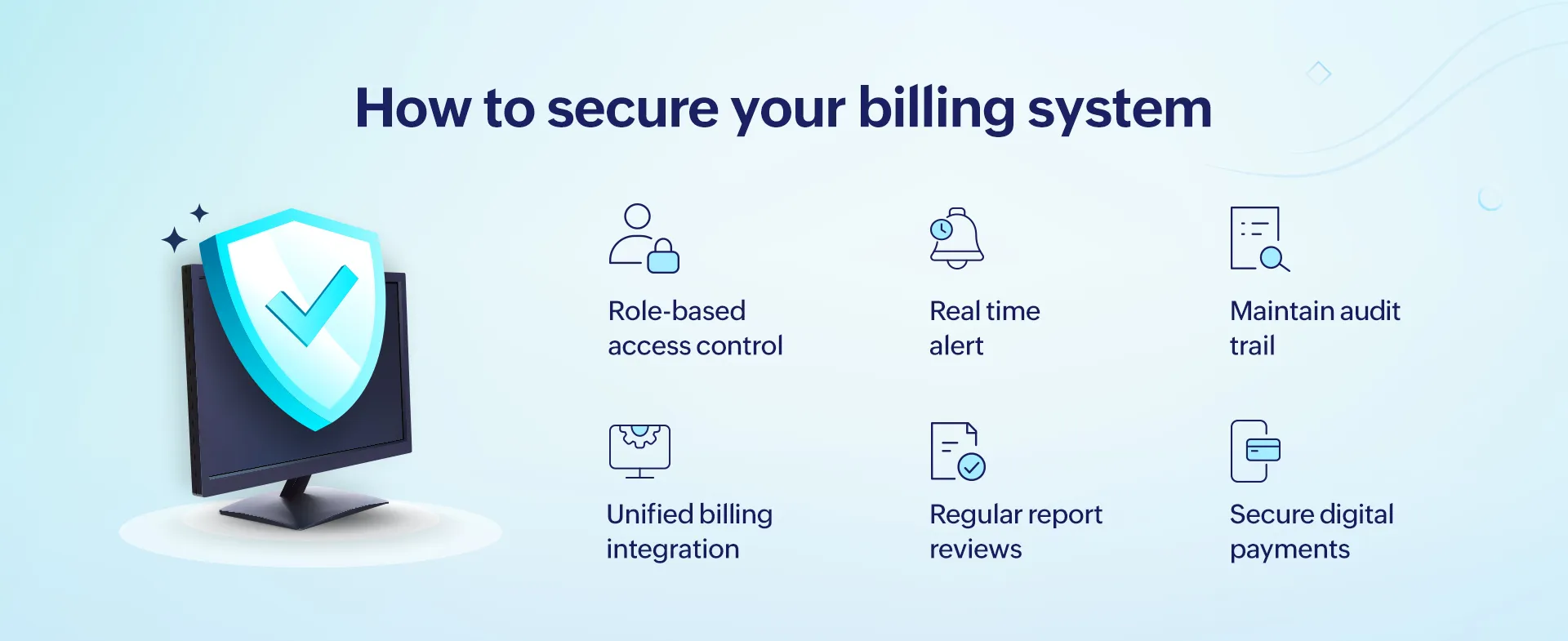
How to secure your billing system
You don’t need complex IT tools or high-end security systems to stop billing misuse.
Even small businesses can protect themselves with a few smart practices and simple technology-driven controls. Here’s how you can make your billing system strong, transparent, and trustworthy.
Use role-based access control
Not everyone in your business needs full control over billing. When multiple employees share the same login or have unrestricted access, misuse becomes easy and tracking it becomes impossible. That’s why role-based access control is the first step toward billing safety. You can assign permissions based on each person’s role.
- Cashier: Can create bills and process payments.
- Supervisor: Can approve discounts or returns.
- Admin/Owner: Can view reports and system logs.
This ensures that employees can only do what they’re meant to do and nothing more.
It builds clear accountability, and any suspicious action can be traced back instantly.
Example: If only the supervisor can cancel a bill, then you’ll always know who authorized it, reducing the chance of silent fraud.
Enable real-time monitoring and alerts
You can’t afford to find problems days later. By then, the fraud had already caused damage. That’s where real-time monitoring helps. Your billing software should send instant alerts for unusual actions like:
- A deleted or cancelled bill.
- A high-value refund.
- Discounts beyond the allowed limit.
- Price edits or negative sales.
Example: If a cashier cancels three bills within an hour, the system can alert you immediately. You can check what happened from your mobile, even if you’re not in the store. This not only protects you but also builds a sense of accountability among your team.
Maintain an audit trail
Think of an audit trail as a “black box” for your billing system; it records everything that happens. Every transaction, every edit, every refund, all logged with the user name, date, time, and action. This means no one can secretly change or delete data without leaving a trace. Audit trails help you:
- Identify who made unauthorized changes.
- Investigate errors quickly.
- Build evidence if misuse occurs.
Example: If a return is processed without the product being received, the audit log shows who approved it and when. This simple transparency discourages fraud and strengthens internal discipline.
Integrate billing with inventory and accounting
One of the biggest loopholes in small businesses is disconnected systems. When billing, stock, and accounts are handled separately, mismatches and fraud become easy to hide. By integrating these systems, every sale automatically:
- Reduces the correct inventory quantity.
- Updates your accounts receivable.
- Reflects in your reports in real time.
Example: If an employee tries to delete a bill, the system immediately shows an inventory mismatch that alerts you to check the transaction.
Review reports and patterns regularly
Fraud often hides in plain sight. The best way to catch it early is by regularly reviewing reports and patterns. Look beyond just total sales and study the details.
- Discount summary reports: Identify unusual or repeated high discounts by one cashier.
- Refund and return logs: Spot fake returns or high refund activity from the same user.
- Void bill reports: Track cancelled or deleted bills and reasons for each.
These reports help you identify behavioral patterns who is frequently cancelling bills or issuing refunds so you can take preventive action.
Example: If one staff member consistently issues refunds during night shifts, it’s worth a closer look. Regular reviews make your employees aware that every action is visible and accountable.
Secure digital payments
Digital payments like UPI, wallets, and QR codes have made transactions faster, but they’ve also opened new doors for misuse. Common risks include:
- QR code swapping (replacing the original business QR code with a personal one).
- Fake “collect request” scams sent to staff.
- Personal UPI IDs used instead of business accounts.
To stay safe:
- Always verify your official business QR codes.
- Use a single, verified business UPI or payment gateway integrated with your POS.
- Reconcile all digital payments daily to ensure no transaction is missed.
Train your staff and build awareness
Even the most secure systems can fail if people using them are unaware. Sometimes fraud happens not out of intent, but because of a lack of awareness or weak policies. That’s why staff training is as important as software setup. Train your team to:
- Follow standard billing processes.
- Avoid sharing passwords or login credentials.
- Verify payments before confirming sales.
- Report suspicious behavior immediately.
Encourage open communication; when employees understand why security matters, they’re more likely to protect the system rather than exploit it.
How Gofrugal helps prevent billing misuse
With over 30,000 businesses across retail, restaurant, and distribution industries, Gofrugal has helped business owners protect their profits and build trust through strong, built-in billing security. Here’s how Gofrugal makes your billing system foolproof.
- Role-based access control: Give every user such as cashier, supervisor, or admin specific permissions. Only authorized users can bill, cancel, or approve discounts.
- Real-time alerts & notifications: Get instant alerts on suspicious refunds, excessive discounts, or bill cancellations through the WhatsNow mobile app.
- Integrated billing, inventory, & accounts: Every sale automatically updates stock and accounts, eliminating fake entries and mismatches.
- Real-time reports & analytics: Track sales, refunds, and discounts anytime to detect unusual trends early.
- Approval-based workflows: Set multi-level approvals for discounts, returns, or price edits. Nothing happens without your consent.
- Session management & cash handover: Lock each cashier’s session at shift end and digitally verify cash handover for full transparency.
- Cash drawer & denomination control: Match daily cash with billing totals automatically to ensure zero discrepancies.
- Tamper-proof data & auto backup: Every action is logged and securely backed up, giving you a transparent audit trail.
- Weighing scale integration for accurate billing: For grocery, retail, or F&B outlets, Gofrugal integrates directly with weighing scales that captures weight data automatically, preventing manual tampering or over/under billing.
Billing misuse may start small like a cancelled bill, a fake refund, or an unauthorized discount but over time, it silently erodes profits and trust. The only way to stay safe is through consistent control, real-time visibility, and technology that never sleeps. With Gofrugal’s secure POS and billing system, you don’t just prevent fraud, you build a transparent business where every rupee is accounted for and every transaction builds trust.
Stay alert. Stay secure. Protect your profits with Gofrugal.
Frequently Asked Questions
What are the most common types of billing fraud or misuse in organizations?
Common billing frauds include fake refunds, cancelled bills after cash payments, and unauthorized discounts. Staff may exploit weak permissions or lack of monitoring. Regular audits and restricted access help reduce such misuse.
How can I detect unusual billing activities early?
Enable real-time alerts for void bills, refunds, and large discounts. Track audit trails and exception reports to spot irregular patterns. Early detection helps you act before losses occur.
What security measures should be implemented to protect billing data?
Use a POS system with encryption, role-based access, and automated backups. Restrict data export and ensure only authorized users can access billing reports. Regular monitoring strengthens billing data security.
How does user access control help prevent billing fraud?
Role-based access control limits who can bill, cancel, or apply discounts. Each employee gets defined permissions, creating accountability. This minimizes internal misuse and maintains billing transparency.
What role does encryption play in securing billing systems?
Encryption ensures sensitive billing and payment data can’t be read or altered by outsiders. It protects both customer and business information. This is a key layer in POS data security.
How can two-factor authentication (2FA) improve billing security?
Two-factor authentication adds an extra login step through OTP or app verification. It prevents unauthorized system access even if passwords are stolen. This boosts the overall safety of your billing system.
How often should I review billing reports and logs?
Review key billing reports daily, such as refunds, void bills, and discounts. help you identify patterns of misuse. Consistent checks reduce fraud and maintain control.
How does Gofrugal help prevent billing fraud?
Gofrugal offers built-in tools like real-time alerts, audit logs, and role-based security. The WhatsNow app keeps you updated on all billing actions remotely. This ensures 100% visibility and control across outlets.